
The Equal Partnerships project and the Mixed Migration Centre organized a migration workshop at the 9th Africities Summit, from 17th to 21st of May, in Kisumu, Kenya.
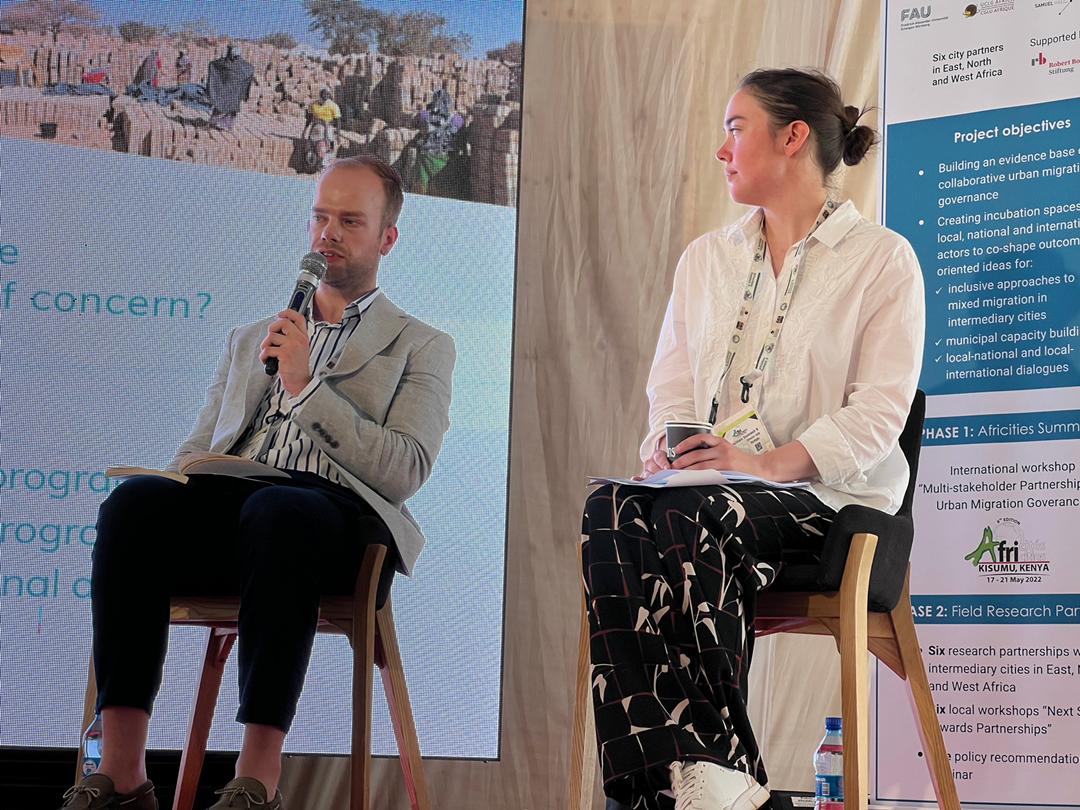
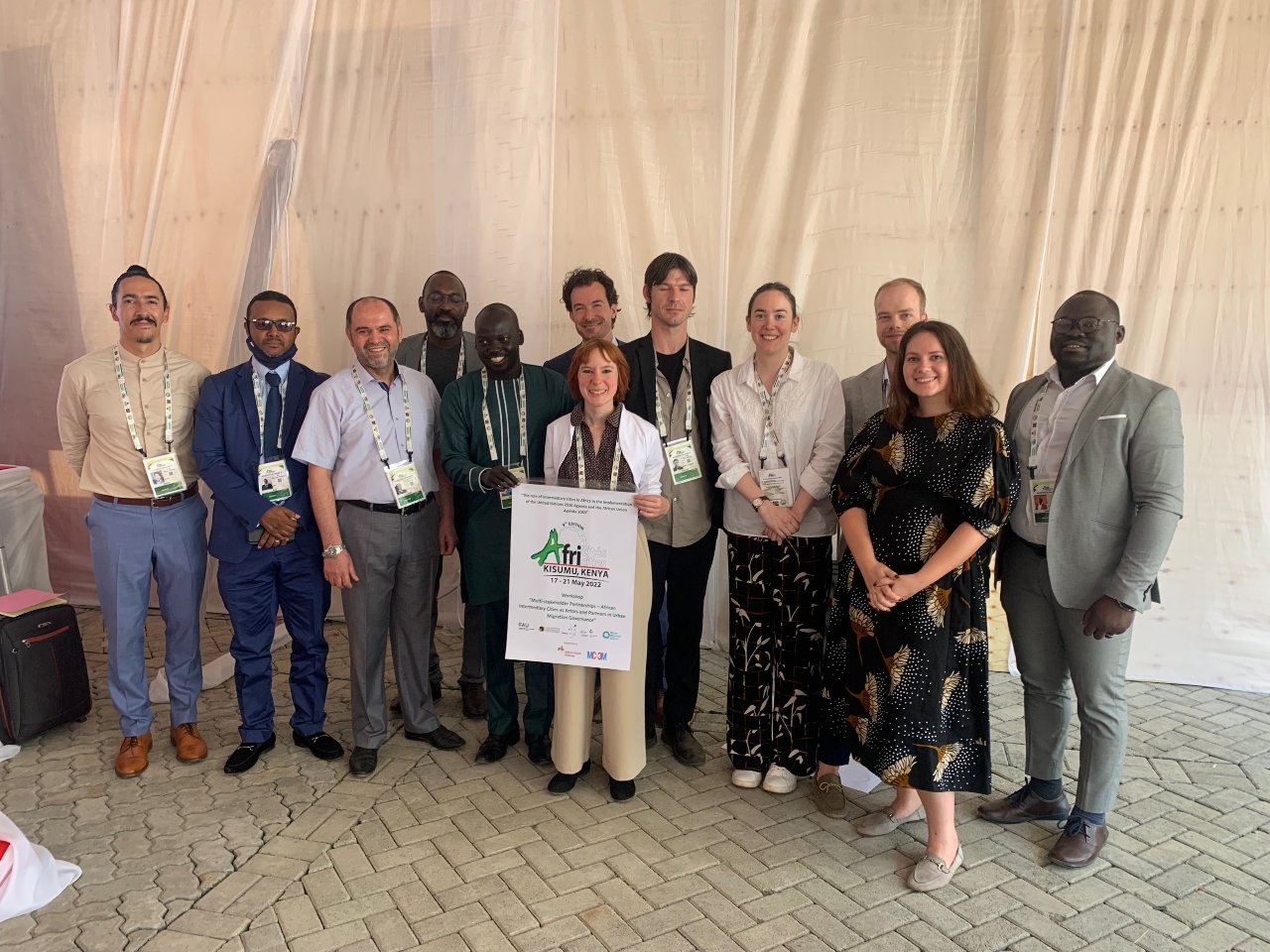
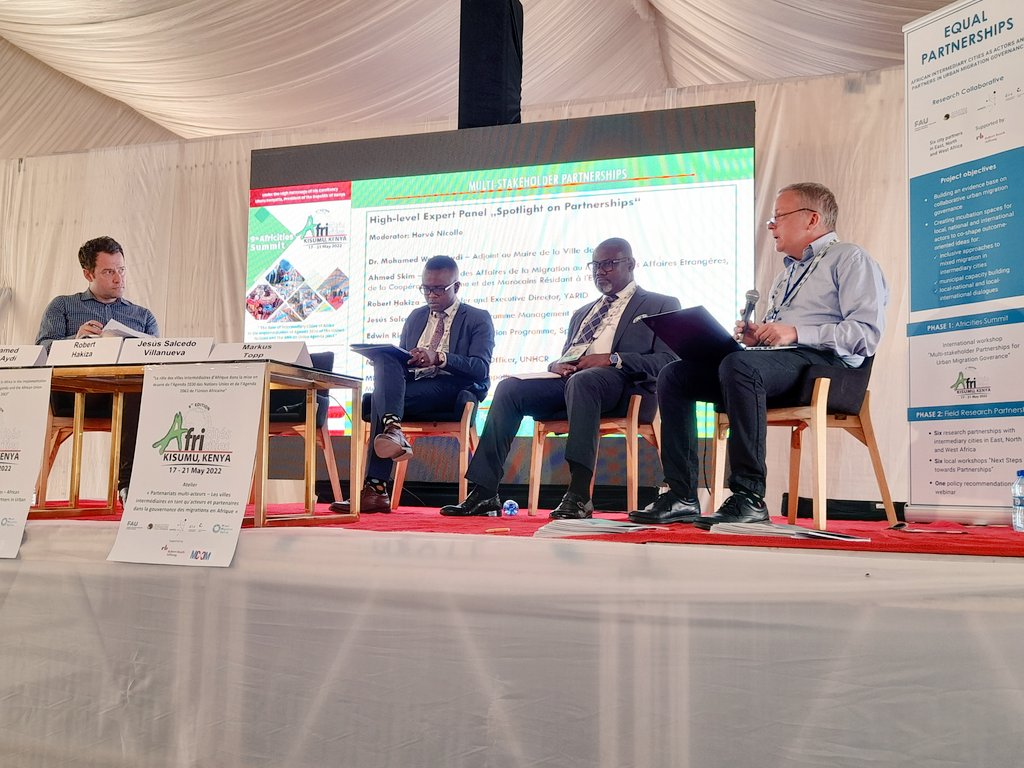
The discussions are vivid on the 18th of May in the Africities’ tent number 14. “What made it possible for your city to start addressing questions of migration and displacement? How did you gain partners and funding? Which are the right city networks to join?” City representatives from Mali, Mauritania and Senegal have many questions for the Tunisian Vice-Mayors of Sfax and Sousse who have just shared their experiences on multi-stakeholder partnerships for urban migration governance. They are not the only ones. Over 50 participants have travelled to the Kenyan city of Kisumu on the banks of Lake Victoria to participate in the Africities workshop “Multi-stakeholder Partnerships – African Intermediary Cities as Actors and Partners in Urban Migration Governance” organized by the Equal Partnerships project in cooperation with the Mixed Migration Centre (MMC).
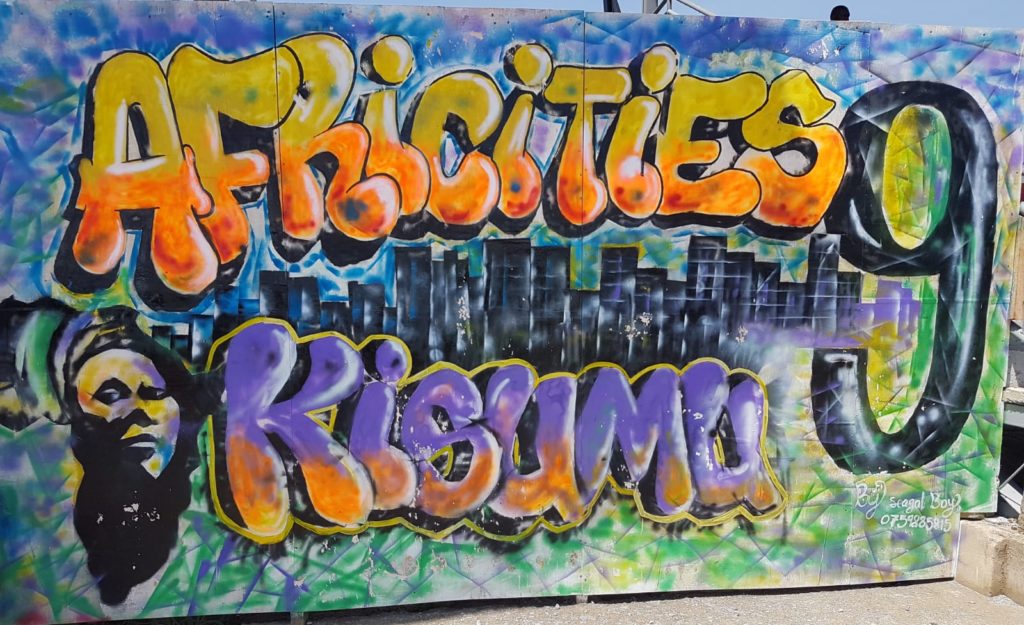
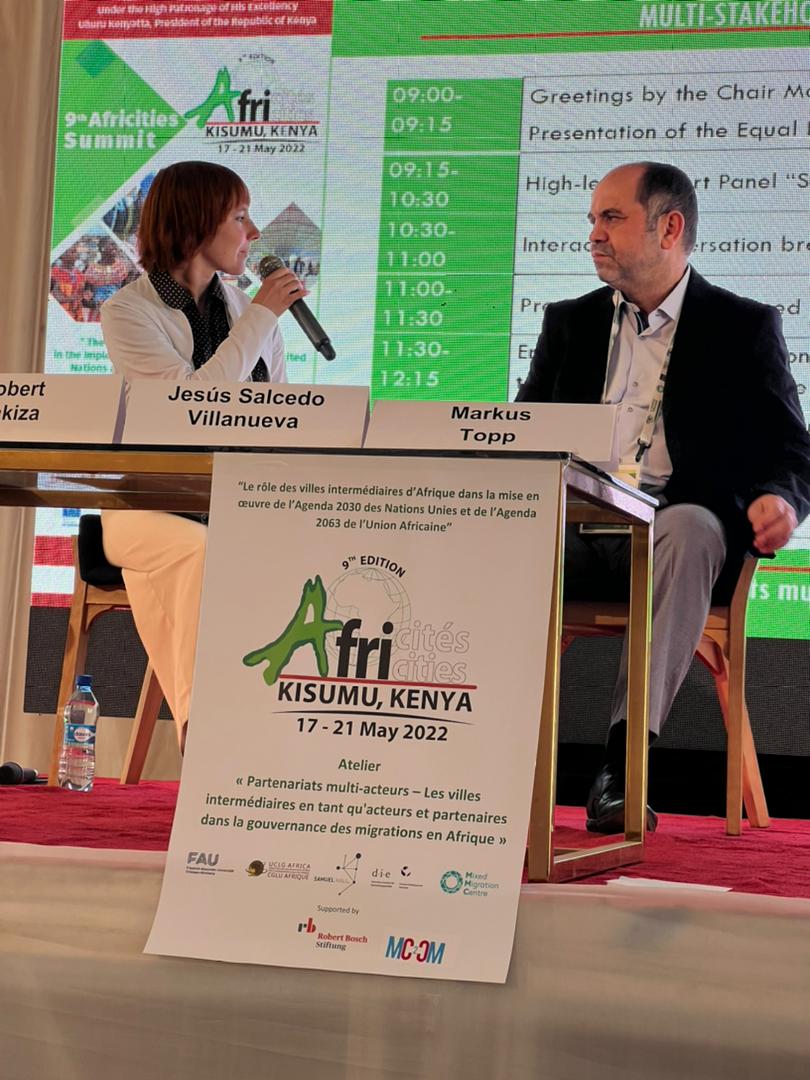
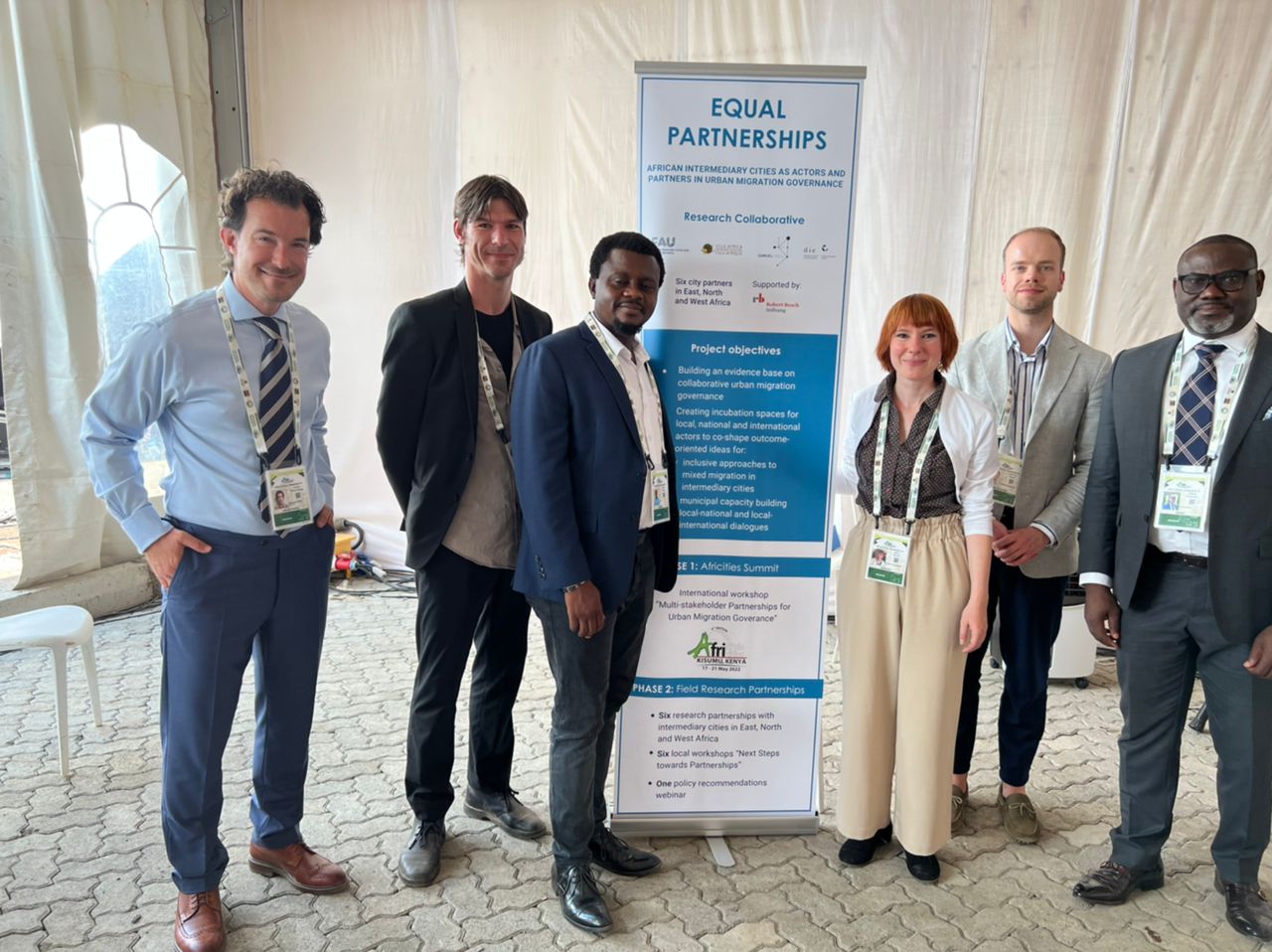
The largest Africities Summit so far – 11,000 participants gathered in Kisumu, Kenya
The workshop forms part of the 9th Africities Summit bringing together over 11,000 participants – among them African ministers, mayors and elected officials of local and regional governments, civil society organizations, traditional authorities, representatives of the African diaspora, economic actors, researchers, financial institutions and development partners. Organized every three years, Africities, the flagship event of the city network UCLG Africa, addresses major questions of the Agenda 2063, aiming to strengthen the role of local and regional governments on diverse development issues of the continent.
At the “Multi-stakeholder Partnerships” workshop, city representatives from Ghana, Kenya, Mali, Mauritania, Senegal, The Gambia, Tunisia, Uganda and many other African countries gathered to discuss the role of local authorities in addressing rural-urban movements, urban displacement and the effects of human mobility linked to climate change on African cities. They were joined by representatives from UN-Habitat, UNHCR and IOM, as well as migrant and refugee-led organizations such as YARID from Uganda and Afrique Intelligence from Tunisia.
From spaces to actors – African cities can play a role in addressing migration and displacement
Workshop participants highlighted that African intermediary cities are increasingly becoming central nodes of mixed migration. 1 UCLG Africa representatives recalled that with the adoption of the “Charter of local and subnational governments of Africa on migration” in 2018, more than 30 local and regional governments (LRGs) emphasized that mixed migration could be a catalyst for socio-economic development if LRGs had the necessary means and partners to implement inclusive and cross-sectoral approaches. Representatives from IOM, UNHCR, UN-Habitat, the Moroccan Ministry of Foreign Affairs, African Cooperation, and Moroccan Expatriates and refugee and migrant-led organizations, in turn, expressed interest and showcased commitment to collaboration with LRGs on questions of mixed migration. Overall, workshop participants highlighted that organizations and projects such as Cities Alliance, the Mayors Mechanism, MC2CM and UCLG Africa have pioneered work in this regard. While important progress has been achieved so far, participants emphasized that knowledge and cooperation gaps remained in many areas between local, national and international actors and in working along mixed migration routes.
Multi-stakeholder partnerships are key for resilient urban migration governance
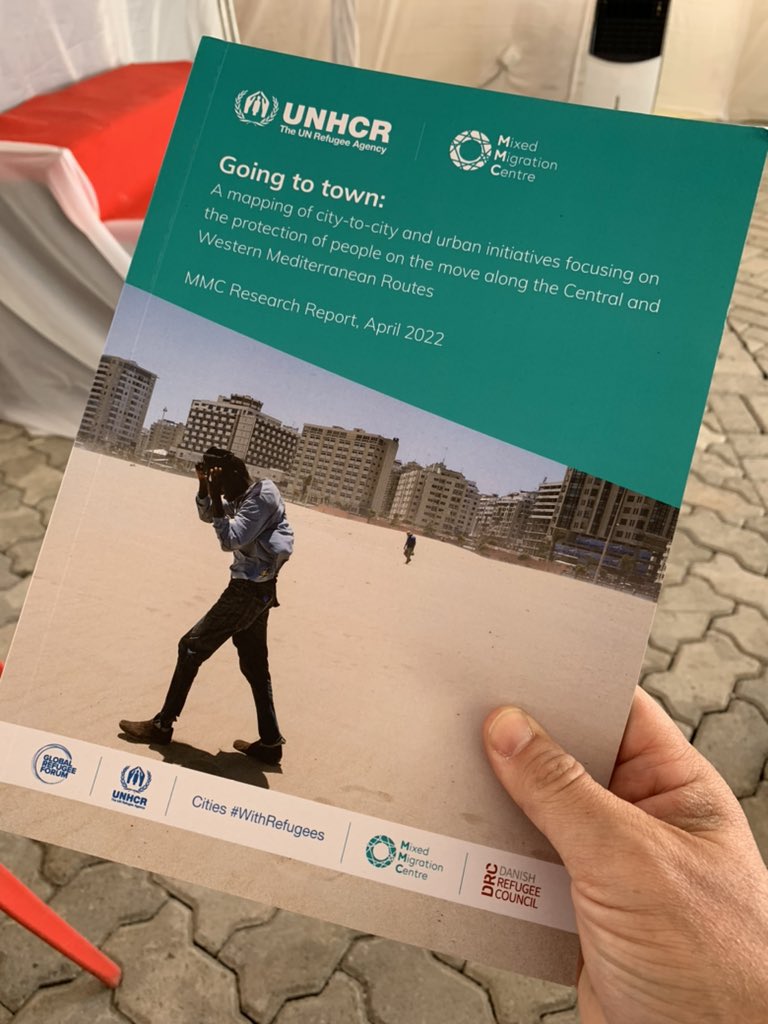
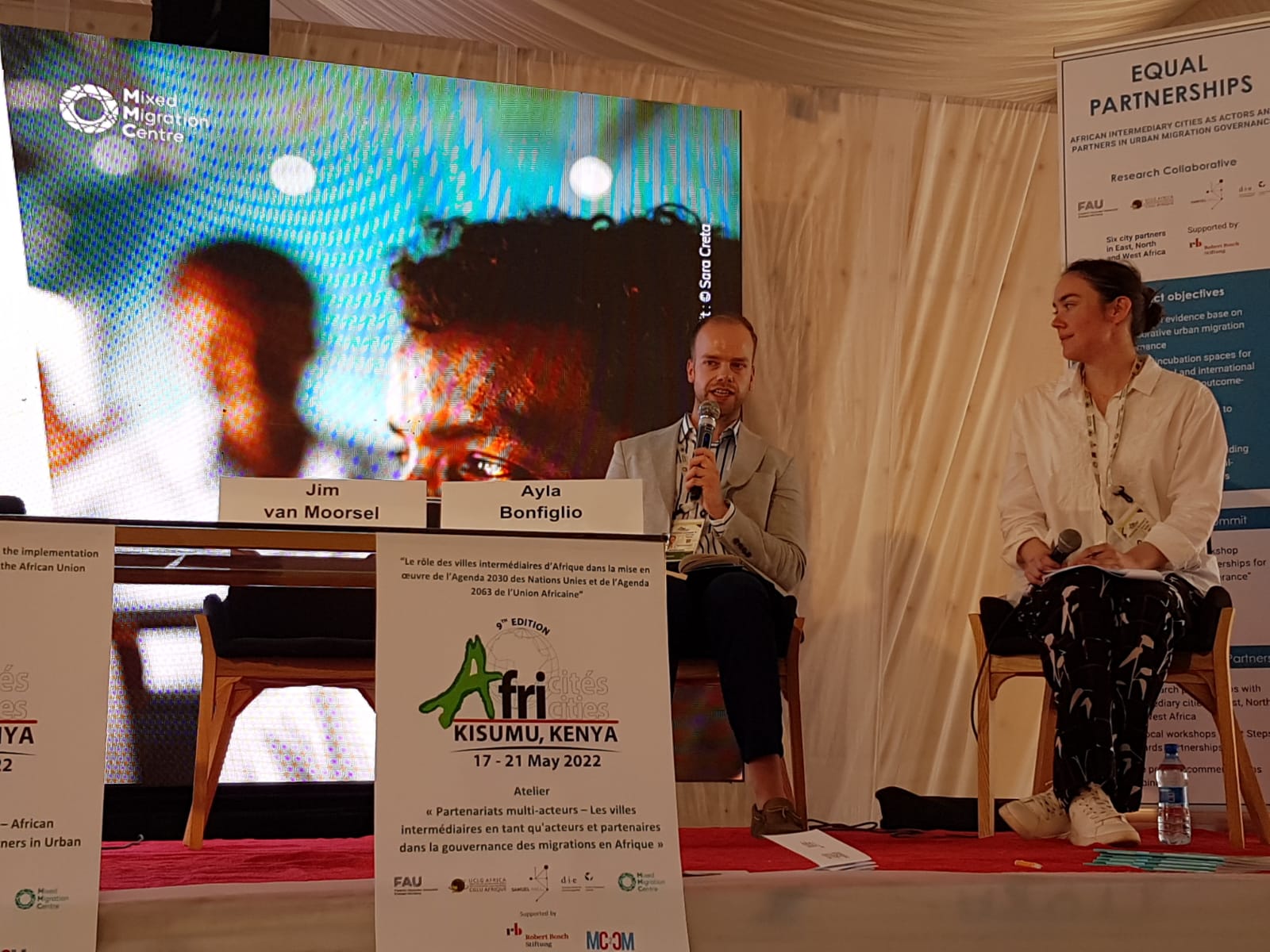
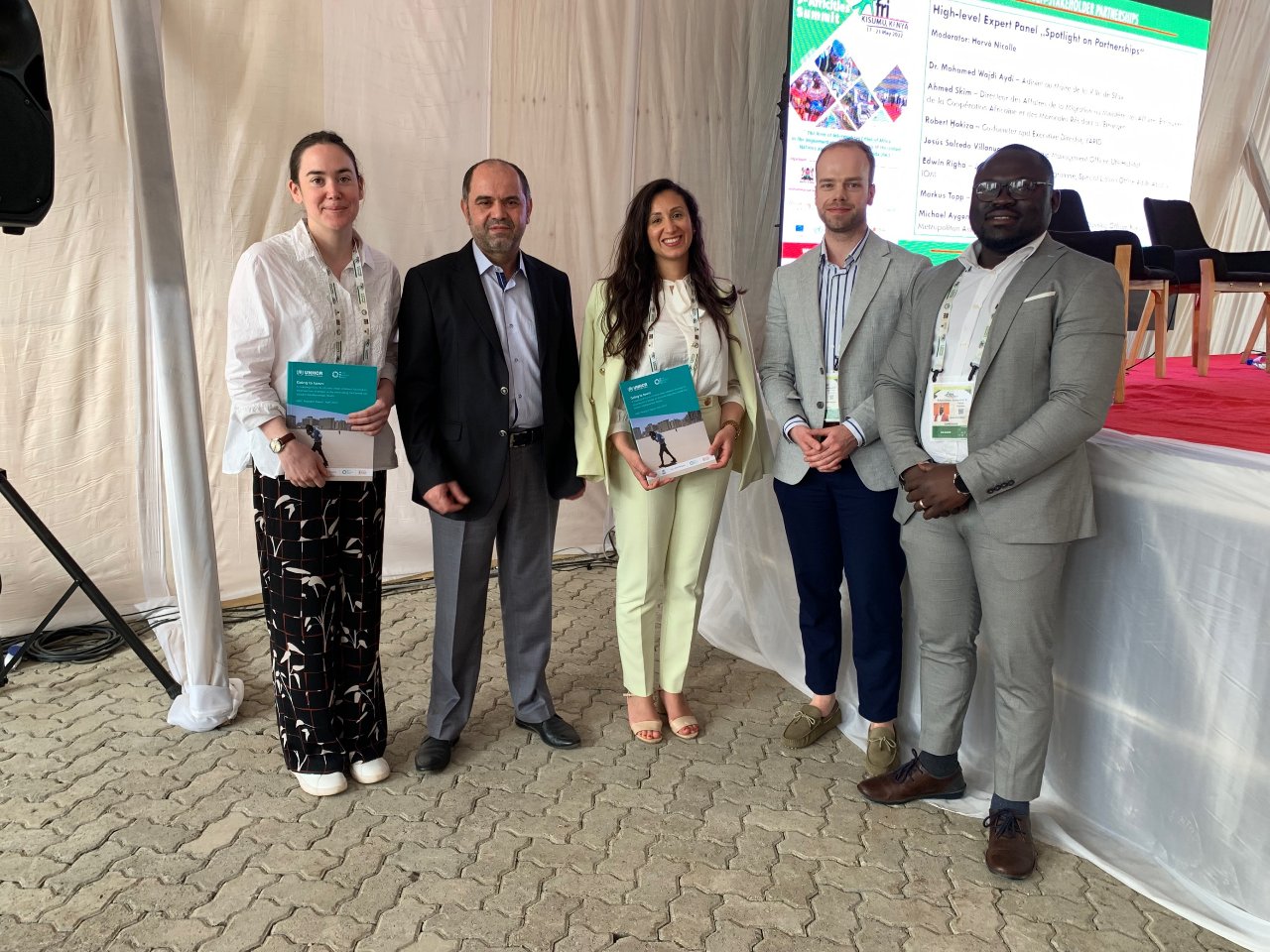
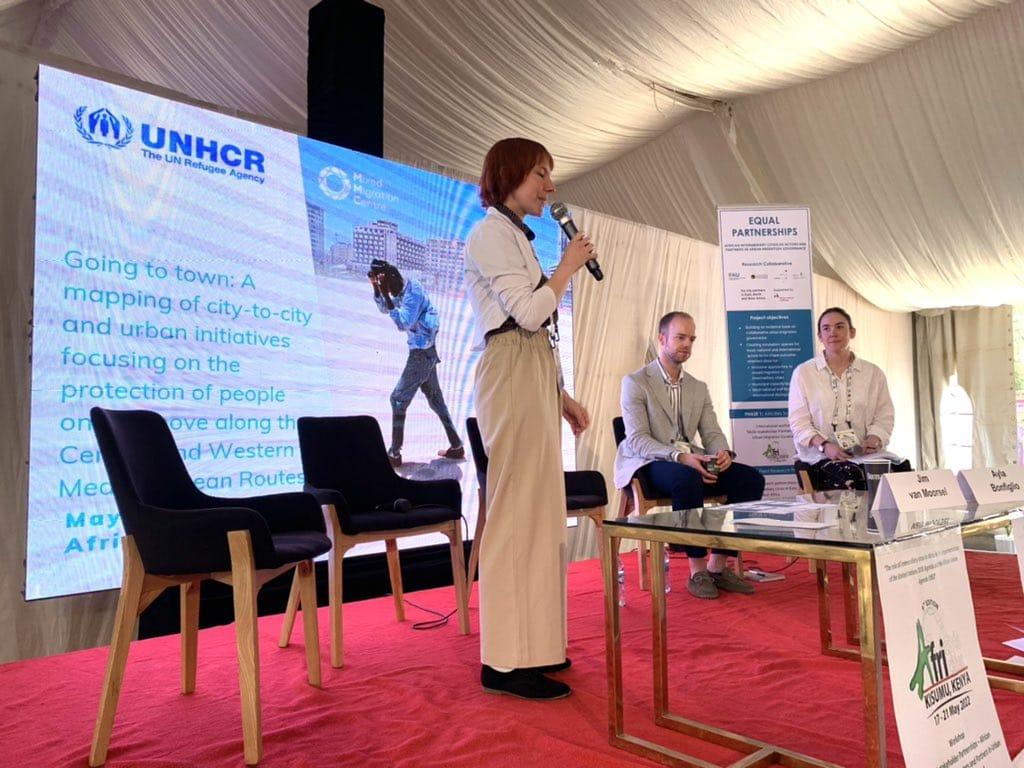
Building on the idea that bottom-up approaches to urban migration governance can prove decisive in developing urban resilience, the workshop provided an interactive space for the broad variety of actors to reflect on their respective capacities, interests and limitations in responding to mixed migration in intermediary cities. The Mixed Migration Centre presented the main outcomes and recommendations of the recent study launched in partnership with UNHCR: “Going to town: A mapping of city-to-city and urban initiatives focusing on the protection of people on the move along the Central and Western Mediterranean Routes”. The study aims to be a mapping tool for cities and other key stakeholders, which they can use while working on the protection of refugees and migrants in urban settings. It provides an overview of identified types of urban protection programming, sets out different kinds of activities city-led protection initiatives can engage in, and maps existing initiatives, networks and projects cities can connect to or draw inspiration from.
During the breakout sessions, workshop participants focused in particular on identifying complementary skills, sharing innovative practices and rethinking opportunities for shaping multi-stakeholder partnerships in the spirit of the African Local Migration Charter and the Global Compacts for Migration and Refugees. In this context, the workshop also provided a platform to discuss the Call to Local Action for Migrants and Refugees presented by the Mayors Mechanism in partnership with UNHCR at the International Migration Review Forum held in parallel to the Africities Summit.
Recommendations for partnerships
The interactive debates led to eight recommendations for multi-stakeholder and multi-level partnerships addressed to local and national authorities, international organisations and city networks:
- Local governments should actively seek the dialogue with their national counterparts where the situation is considered conducive and would not constrain national-local relationships to identify ways of collaborating on questions of mixed migration.
- Local governments should attempt to mainstream mixed migration issues into city action, reach out to partners to work on integration and advocate for avoiding working in “silos”.
- Local governments should promote the creation of cooperation platforms in their cities to bring together a wide range of actors addressing questions of mixed migration to ensure better information sharing, coordination and partnerships.
- Local governments are invited to join the Call to Local Action for Migrants and Refugees launched by the Mayors Mechanism in partnership with UNHCR.
- Local and national authorities should include dialogue and consultations with migrant and refugee communities in all stages of policy development and implementation to ensure that action is needs- and evidence-based.
- National authorities should work together with local authorities to improve local databases, ensuring data protection, and to support local strategies for inclusive approaches to mixed migration that benefit migrants, refugees and local communities.
- Humanitarian and development actors introducing area-based approaches to respond to issues of mixed migration and protracted displacement in cities should work together with local authorities as well as other relevant stakeholders (private sectors, civil society organisations, unions, etc.) in the design, planning and implementation phases.
- City networks and city initiatives working on mixed migration and related topics such as gender equality, socio-economic inclusion and climate change should ensure continuous dialogue and work towards simplifying coordination structures.
The workshop was co-organized by the Centre for Human Rights Erlangen-Nuremberg of the University of Nuremberg, UCLG Africa, Samuel Hall and the German Development Institute as part of the project “Equal Partnerships – African Intermediary Cities as Actors and Partners in Urban Migration Governance”. The workshop benefited from a cooperation with the MMC and was supported by the Robert Bosch Stiftung and the MC2CM project.
We are at the #Africities Summit this week in Kisumu 🇰🇪 Some photos from the first day👇
On 18 May, MMC will facilitate discussions at the workshop "Multi-stakeholder Partnerships – African Intermediary Cities as Actors and Partners in Urban Migration Governance" @Africities9 pic.twitter.com/ijNzzt7vmH
— Mixed Migration Centre (@Mixed_Migration) May 17, 2022
At today's @EqualPartnersh1 @Africities9 workshop, @AylaBonfiglio & @JimMoorsel presented research from MMC & @Refugees' report on city-to-city and urban initiatives on the protection of people on the move along Central and Western Mediterranean Routes 👉 https://t.co/Av1jHOQ5Hz pic.twitter.com/wsOSCxdx4C
— Mixed Migration Centre (@Mixed_Migration) May 18, 2022
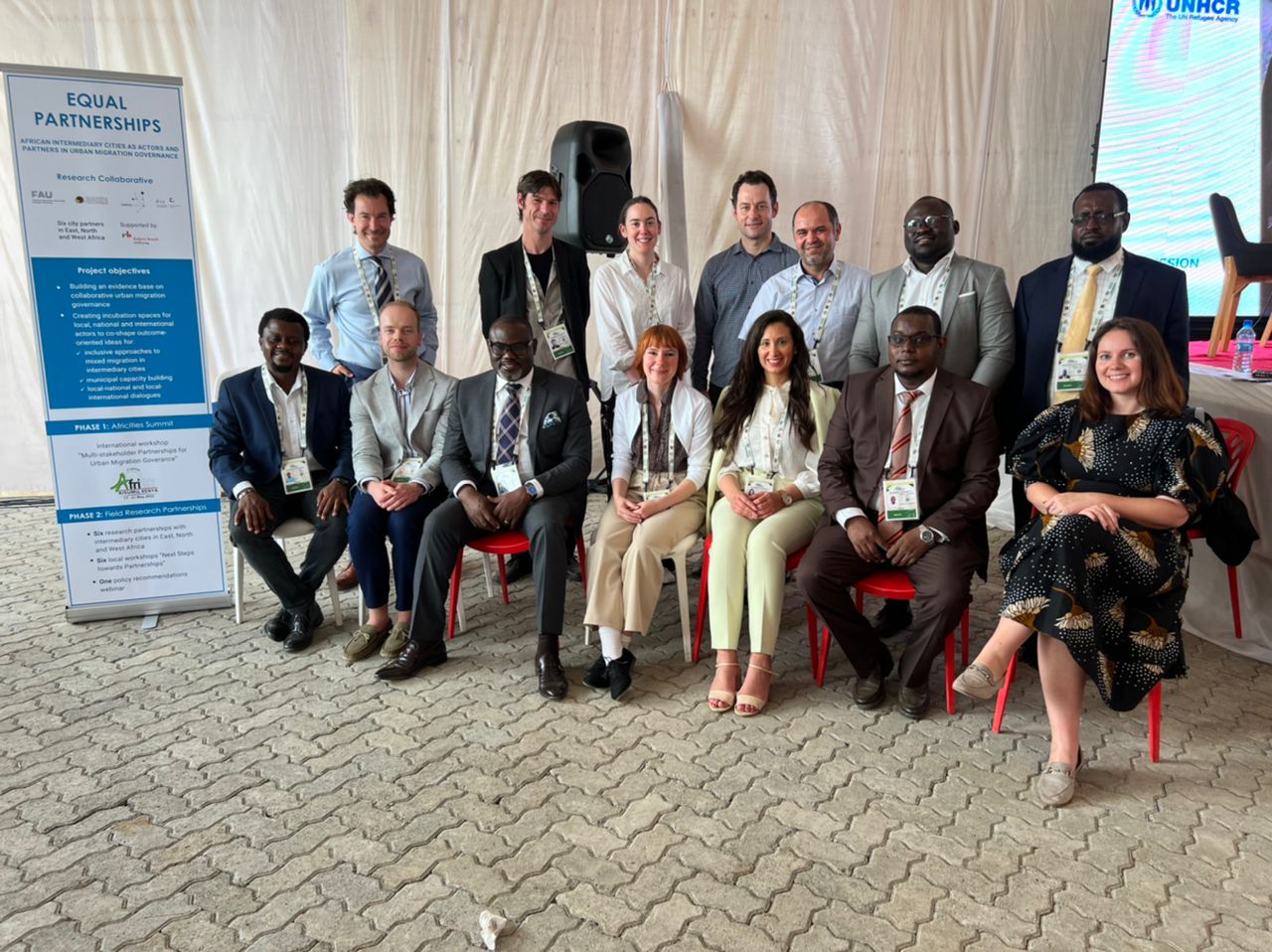
Thank you to the many organizers, moderators, and participants of the workshop! #Africities9 pic.twitter.com/7OeHAuS0yH
— Mixed Migration Centre (@Mixed_Migration) May 18, 2022